Last updated: September 10, 2026
Key Takeaways
- Small patios, around 10 by 12 feet, usually look better with simpler, larger units.
- A 2-foot-wide sample on a table and a 300-square-foot patio in direct sun are not the same surface.
- Verify whether the space is under 150, 150 to 300, or over 300 square feet.
- Measure whether the patio gets full sun for more than 6 hours a day or heavy shade.
Stamped concrete can look sharp, or it can look overworked. For a patio, how to choose the right stamp pattern for your patio comes down to size, style, and maintenance. On a new or resurfaced slab, I’d pick the pattern only after settling three things: the patio’s size, the home’s style, and how much upkeep I’m willing to live with. Simple? Not always.
Who this is for, and what you need to know first
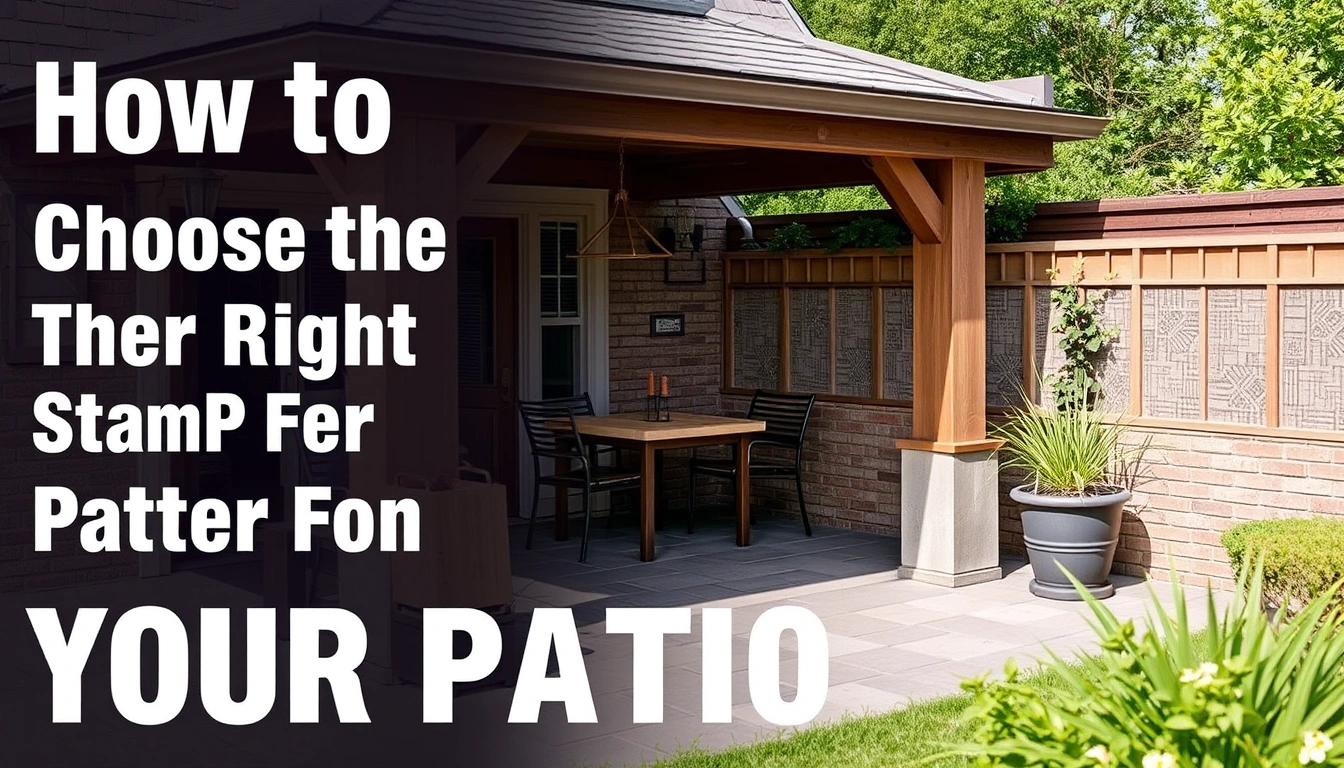
This is for a homeowner choosing how to choose the right stamp pattern for your patio for a new or resurfaced concrete patio, usually in the 150 to 400 square foot range, who wants the patio to look intentional rather than busy. I am assuming you already know the basic difference between plain concrete and stamped concrete: the surface is imprinted with mats or rollers while the slab is still workable, then colored with release powder, integral color, or stain.
The pattern choice matters more than most people expect. A heavy slate pattern can make a small patio feel crowded. A random stone pattern can hide joints and minor surface variation, which helps on older slabs, but it can also look too rustic beside a very formal brick house. A wood plank stamp can look sharp on a modern home, but it can fight with an old Colonial or Tudor facade. Funny how one surface can change the whole mood.
I would not treat this as a purely decorative choice; if the slab is unusual, consult a qualified stamped-concrete contractor before you decide. Pattern, joint layout, and edge detail all affect how the patio reads once furniture, planters, and shade are in place. The pattern that matches the scale of the setting is usually better than the one with the most dramatic texture.
If your patio will sit over unstable fill, on a steep slope, or in an area with obvious drainage problems, pattern choice is not the first decision. The base and water management come first. A beautiful stamp will not rescue a slab that moves.
Which stamp pattern fits your patio style?
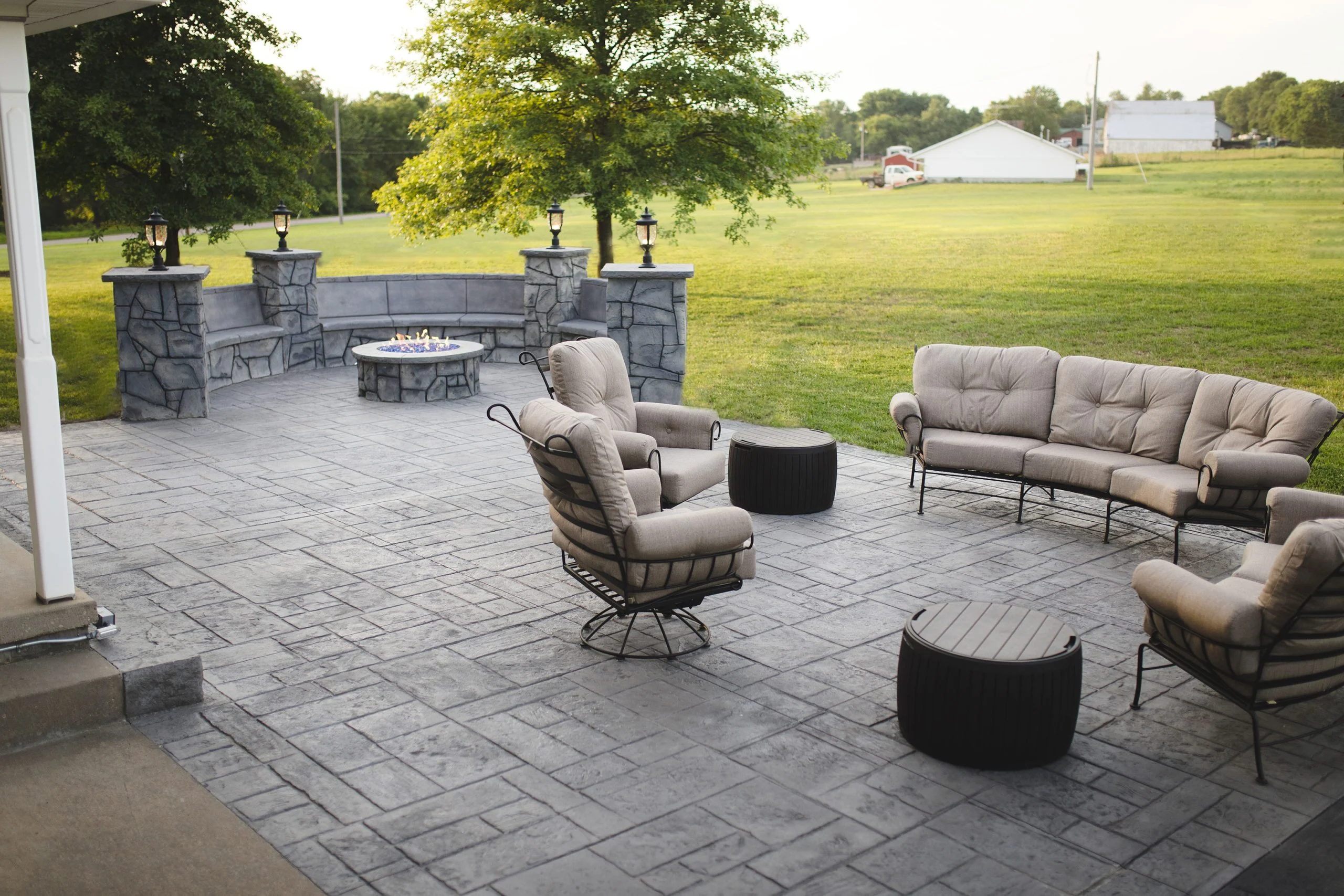
The right pattern is the one that matches the architecture and the size of the slab, not the one that looks most detailed in a brochure. A pattern has to work at full scale on the ground, where a 12-by-12-inch repeat reads very differently than it does on a sample board. In the context of how to choose the right stamp pattern for your patio, scale matters as much as style.
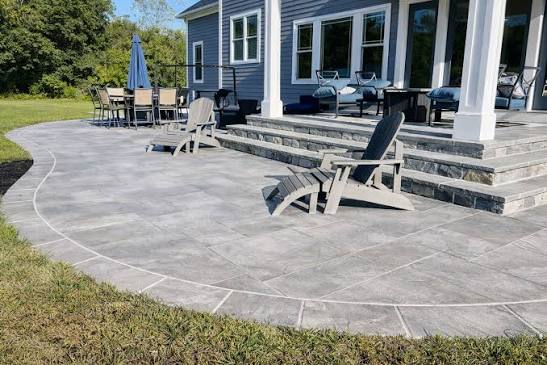
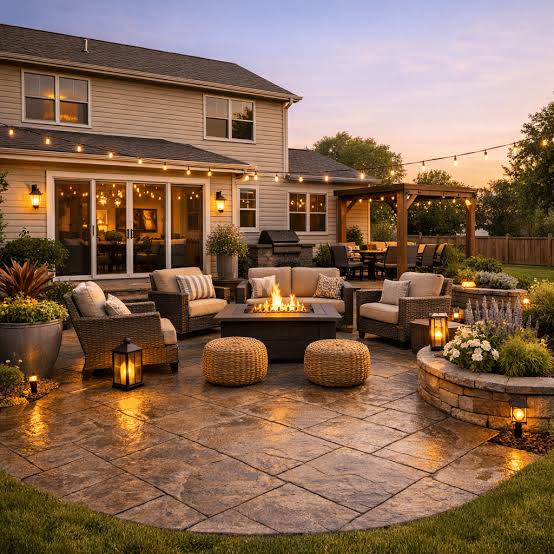
Three filters help. Match the house style first. Clean-lined homes usually suit ashlar slate, plank, or large-format stone. Traditional brick homes usually take cobble, running bond, or irregular slate more comfortably. Then match the patio size. Small patios, around 10 by 12 feet, usually look better with simpler, larger units. A busy multi-shape pattern can make the area feel chopped up. Last, match the furniture plan. If you expect a dining table, grill, and two chairs, a quieter pattern gives the eye a place to rest.
A pattern also changes how dirt and wear show. Random stone and textured slate hide leaf stains and foot traffic better than smooth tile-like patterns. That matters on patios under trees or near a garden hose bib. Tight geometric layouts can look crisp on day one, but they can start to telegraph uneven fading once the sealer wears in patches. That’s the catch.
The biggest mistake is choosing a pattern from a photo taken at a different scale. A 2-foot-wide sample on a table and a 300-square-foot patio in direct sun are not the same surface. I would ask the contractor for a pattern name, not just a style description, because “flagstone” can mean several different matrix layouts depending on the form system.
How do I narrow the pattern down before I call a contractor?
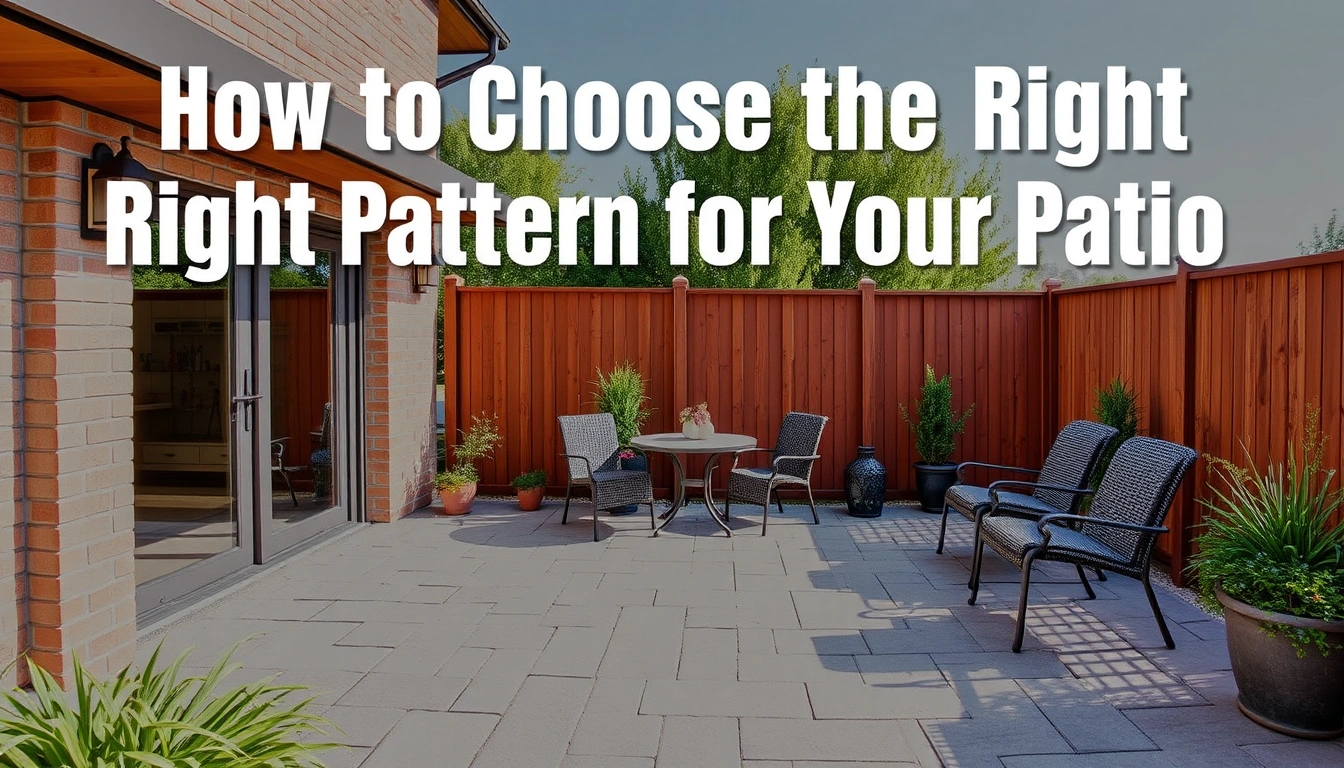
You narrow it down by comparing five practical things: the house style, patio size, the amount of sun, how much texture you want underfoot, and how visible the surface will be from the house. That sounds simple, but it is the step most people skip.
Start with the view from inside. If the patio is seen through a kitchen door or family-room windows, the pattern will read like an outdoor floor. In that case, I would favor a calmer layout such as ashlar slate, large random stone, or running bond. If the patio is mainly a side yard or grilling zone, you can get away with a busier pattern.
Next, think about joint rhythm. A stamped pattern usually contains fake mortar lines or grout lines. Those lines should not fight the control joints, which are saw-cut or tooled lines in concrete placed to manage cracking. A contractor should plan where the control joints go before the stamp is set. If the pattern and joints conflict, the slab can look crowded and the joints can become obvious in the wrong places.
Then consider slope and drainage. A patio that falls about 1/8 to 1/4 inch per foot away from the house needs a pattern that still reads cleanly on a slight angle. Long linear plank stamps can emphasize slope; random stone softens it. If water will cross the surface after a rain, deeper texture can slow drainage visually, which is not ideal.
Finally, match maintenance to your tolerance. Heavier texture traps more debris and can hold more sealer, which may darken the surface. Smoother patterns are easier to rinse but can be more slippery when sealed.
What should I ask a stamped concrete contractor before I choose?
You should ask about pattern depth, joint placement, sealer type, and how the contractor handles corners, edges, and cuts. Those details tell you far more than the pattern name alone.
Ask what stamp family they plan to use: ashlar slate, random stone, cobble, wood plank, seamless texture, or brick. Ask for the exact matrix or layout if they can provide it. “Ashlar” is a broad category; the module size can vary, and that changes the final look. Ask what border they recommend. A simple border can frame a busy center field, and on a patio larger than about 200 square feet, that framing often helps.
Ask how the pattern will meet existing concrete, steps, or pool coping. If the patio abuts a house slab, the contractor should explain how they will keep the stamped field from looking disconnected. Ask whether the pattern will be aligned with the house or with the primary view line. On many patios, aligning to the house makes sense structurally, but aligning the stamp to a seating area makes the space feel more intentional.
Ask what sealer they use. Film-forming sealers often deepen color and make the pattern pop, but they can also create a shinier surface and require reapplication. Penetrating sealers look more muted and can be easier to live with, though they usually do less to highlight the stamp. The wrong sealer can make a good pattern look plastic.
A good contractor should also explain what happens at expansion joints and around drains. If the answer is vague, that is a warning sign. Pattern choice is not a standalone design decision; it is part of the slab plan. For more on slab detailing, see the American Concrete Institute at https://www.concrete.org and the Portland Cement Association at https://www.concrete.org/topicsinconcrete.aspx.
How do I choose the right stamp pattern, step by step?
You choose it by reducing the field to a few candidates, checking them against the site, and then asking the contractor to show you how the chosen pattern will be laid out on your actual slab dimensions. That is how to choose the right stamp pattern for your patio without guessing from a brochure.
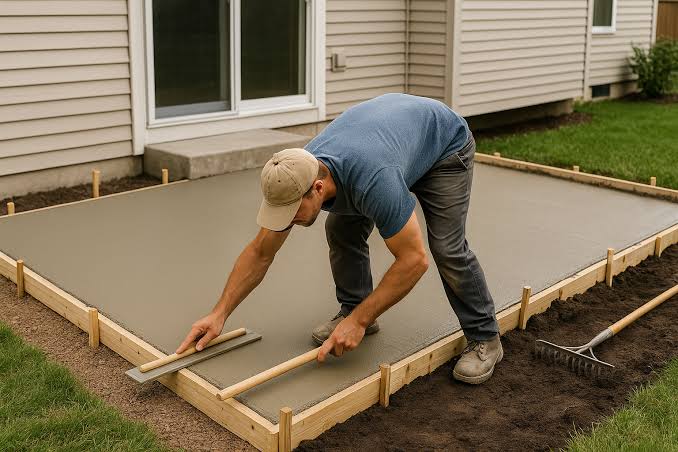
- Measure the patio area to the nearest foot, and note the longest straight edge, the number of corners, and any steps or doors. Verify whether the space is under 150, 150 to 300, or over 300 square feet. If the slab is irregular or has many corners, a complex pattern can become visually noisy.
- Identify the home style in plain terms: ranch, colonial, farmhouse, contemporary, Mediterranean, or traditional brick. Verify whether the exterior has strong straight lines or softer, older detailing. If the pattern fights the architecture, it will look added on rather than built in.
- Decide the visual weight you want: light, medium, or heavy texture. Verify by looking at sample boards in daylight, not under shop lighting. If you cannot read the pattern from 10 to 15 feet away, it may be too busy for the space.
- Choose between random and regular layouts. Random patterns such as stone or slate hide imperfections better; regular patterns such as brick or plank look cleaner and more formal. Verify whether you want the patio to read as rustic or ordered. If you want both, you will likely end up with a border-and-field combination.
- Check the sun exposure and drainage path. Measure whether the patio gets full sun for more than 6 hours a day or heavy shade. Verify whether water drains away from the house at about 1/8 to 1/4 inch per foot. If a pattern is too deep in shade or too glossy in sun, it can become slippery or visually flat.
- Compare control-joint planning with the pattern. Verify that the stamped layout can absorb the saw cuts without awkward intersections. If the joints slice through the most visible part of a large stamped “stone,” the layout has not been thought through.
- Pick a color plan before you finalize the pattern. Verify that the base color, release color, and any border color work together. A complex pattern with two strong colors can overwhelm a modest patio; if the color is loud, choose a simpler matrix.
- Ask for a scaled sketch or layout plan showing how the pattern starts at the house, ends at the edges, and handles corners. Verify that the contractor has thought about full pattern repeats. If the answer is “we’ll figure it out on site,” expect uneven edges or odd cuts.
What are the mistakes people actually make?
The most common mistake is choosing a pattern that looks impressive in isolation and ignores the rest of the yard. The consequence is a patio that feels disconnected from the house. The better alternative is to start with the architecture and choose a quieter stamp if the home already has strong visual character.
Another mistake is using a very small repeat on a small patio. The consequence is visual clutter, especially once chairs, a grill, and a table sit on top of it. The better alternative is a larger, simpler pattern or a border with a calmer center field.
A third mistake is forgetting that texture affects cleaning. Deep grout lines in a cobble or rough stone pattern can hold dirt, pollen, and leaf stain. The consequence is more effort every season, especially under trees. The better alternative is a medium-depth texture if the patio will need frequent hosing or sweeping.
A fourth mistake is treating sealer as an afterthought. The consequence is a surface that looks too glossy, too dark, or patchy in wear. The better alternative is to ask for the sealer type up front and to confirm whether it will deepen the color. If you dislike shine, say so early.
A fifth mistake is picking a pattern without thinking about repair. Some very specific textures are harder to patch invisibly if a section settles or a crack needs attention later. The consequence is that future repairs stand out. The better alternative is a pattern with enough variation to hide minor touch-ups.
When should I stop and choose a different approach?
You should stop and rethink stamped concrete when the pattern choice is being asked to fix a problem it cannot fix. That includes several specific situations.
The patio is already cracked in a way that suggests movement: if settlement or heaving seems active, a stamped-concrete contractor or structural professional should assess the slab first — otherwise the base and drainage need attention before any decorative surface treatment.
The slab area is too small for the pattern you want: a dense pattern on a 9-by-10-foot patio can look cramped — switch to larger modules, a border, or plain broom-finish concrete with one decorative band.
You want a naturally aged, low-maintenance look: stamped patterns usually read as deliberate and finished — if you want a softer, older look, consider exposed aggregate, pavers, or simple concrete with a control-joint layout.
The surface will stay shaded and damp for long periods: texture plus moisture can make a sealed patio feel slick under some conditions — choose a less glossy finish and a simpler pattern, or reduce sealer buildup.
You need easy future repairs or utility access: some highly detailed stamps are awkward to patch around drains, cleanouts, or utility covers — choose a more forgiving pattern or a different paving system.
You cannot get the joint layout and pattern to agree: if the planned saw cuts slice the design in odd places, the finished slab will look forced — ask for a new layout before the pour or resurfacing begins.
If any of those apply, the right answer is not “pick a fancier stamp.” It is to change the paving approach. That may mean a different pattern, a simpler border, or a non-stamped surface.
What does a good result look like after the job is done?
A good result looks calm from 10 feet away and interesting up close. The pattern should read as part of the patio, not as decoration sitting on top of it. The edges should be clean, the borders should frame the space rather than shout, and the joints should disappear into the layout as much as possible.
From a practical standpoint, I would expect the slab to have a consistent color tone, no obvious pattern misalignment at the perimeter, and no awkward cuts around posts, steps, or drains. A stamped patio should also be easy to explain in one sentence: “It looks like ashlar slate with a border,” or “It’s a wood plank pattern with a smooth edge.” If you need a paragraph to justify it, the design may be doing too much.
As for timing, a typical patio job often takes 1 to 3 days on site depending on size, access, curing conditions, and whether the work is a new pour or an overlay. New concrete usually needs time to cure before heavy use; asking about the contractor’s specific schedule matters more than guessing from the calendar. If someone promises a very ornate pattern on a large slab with no time for layout, I would be cautious. According to the U.S. Concrete information from the Portland Cement Association, curing and early use windows vary by mix, weather, and finish.
Cost is tied to pattern complexity, prep work, site access, and finish details. I would expect a decorative stamped patio to cost more than plain broom-finish concrete, and a border, integral color, or overlay will raise the price further. Rather than chase the cheapest bid, ask what is included: base prep, reinforcement, control joints, color, sealer, cleanup, and any repair to adjacent surfaces. For general design and maintenance guidance, see the National Ready Mixed Concrete Association at https://www.nrmca.org and the American Society of Landscape Architects at https://www.asla.org.
What questions should I ask before I sign?
You should ask five direct questions: what pattern name are you using, where will the control joints go, what sealer will you apply, how will the edges be finished, and what happens if the color comes out darker or lighter than expected.
I would also ask whether the contractor can show a recent patio of similar size, ideally one in the 150 to 300 square foot range, because how to choose the right stamp pattern for your patio is easier when you can see how the same matrix reads at full scale. Ask whether they have a written maintenance plan, including resealing intervals, which are often 2 to 5 years depending on traffic, climate, and sealer type. Finally, ask whether the quote includes a mockup or sample area, since that is the simplest way to compare pattern, color, and sheen before the full pour.