Last updated: September 10, 2026
Key Takeaways
- Stamped concrete is not fragile, but it is not low-maintenance in the “ignore it for 15 years” sense either.
- Use a soft broom or leaf blower once every 7 days, and more often after heavy leaf fall.
- Wash the patio with a garden hose and a mild, pH-neutral cleaner every 1 to 2 months.
- Blot oil, grease, rust, leaf tannins, and fertilizer marks within 24 to 48 hours.
Stamped concrete patio durability and maintenance — complete guide begins with two things: how the slab was built and sealed, and how faithfully you care for it afterward. Want a patio that still looks sharp after years of sun, rain, freeze-thaw cycles, grills, and foot traffic? Then you need the real reasons it wears out, what stamped concrete patio durability and maintenance actually demand, and where a small repair ends and a bigger fix begins.
Who this guide is for, and what I am assuming you already know
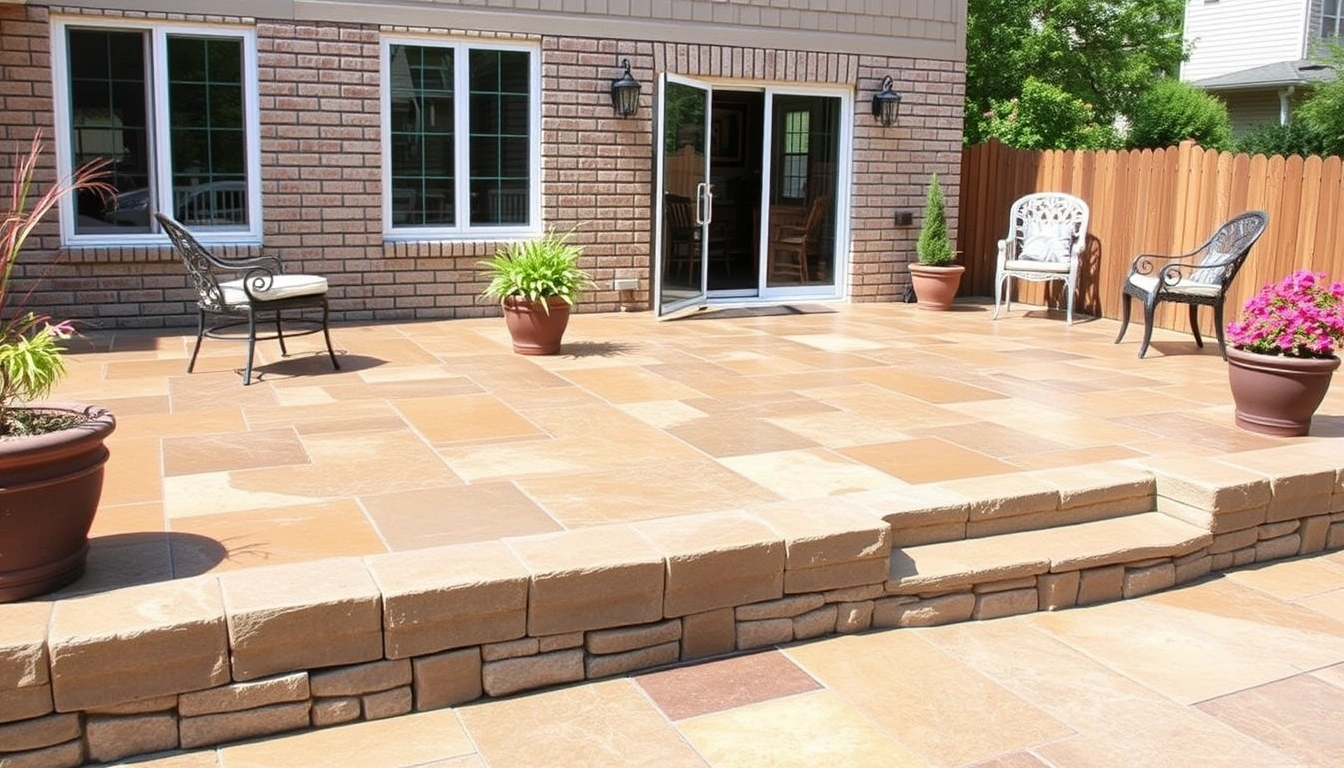
This stamped concrete patio durability and maintenance guide is for a homeowner deciding whether to install, maintain, repair, or reseal a patio, and for the person trying to figure out which contractor to call next. I am assuming you already know the basic difference between plain concrete and stamped concrete: stamped concrete is poured concrete that is colored, textured, and patterned to resemble stone, slate, brick, wood plank, or another finish. Practical guidance only. No sales pitch.
Stamped concrete is not fragile, but it is not low-maintenance in the “ignore it for 15 years” sense either. A good patio can last decades; a poor one can start showing trouble in the first few seasons. The difference usually is not the stamp pattern. It is the subbase, drainage, control joints, mix design, finishing, and sealer schedule.
When the patio has major settlement, heaving, or a slab that moves every winter, maintenance alone will not solve it. Cold regions with freeze-thaw cycles, expansive clay soils, or poor drainage are especially tough on these surfaces. Honestly, I’d be more cautious about a thin decorative overlay in hard-winter areas and more focused on what’s underneath. Same story if the patio sits beside a downspout or a low spot that stays wet for more than a day after rain.
A simple benchmark helps: when the patio is structurally sound, most upkeep stays routine and manageable. But if the slab is cracking through, sinking at one corner, or holding water, the issue is no longer just cosmetic. Then the answer may be localized repair, drainage correction, or replacement instead of yet another coat of sealer.
How durable is a stamped concrete patio?
A stamped concrete patio can be very durable, but its finish layer is only as reliable as the slab below it and the maintenance above it. The concrete itself is not the weak link; usually the trouble shows up in crack control, water intrusion, and surface wear where people walk most or weather hits hardest.
People often ask whether stamped concrete is “as good as” pavers or natural stone. Wrong question, if the slab is built correctly. Stamped concrete is one continuous surface, so there is no joint sand to lose and no separate units shifting around like pavers. On the flip side, when stamped concrete cracks, the crack belongs to the slab. You cannot swap out one piece at a time.
A durable patio usually starts with a compacted base, proper slope away from the house, control joints, and an air-entrained concrete mix where freeze-thaw is a concern. The Concrete Network and many local building codes point homeowners toward drainage and jointing as core durability factors, not decorative extras. A patio that slopes toward the house, even a little, can fail much sooner than one with the right fall. That math stops working fast.
The finish matters too. A stamped surface often uses color hardener, release powder, stains, or integral color, plus a topical sealer. That sealer can wear faster in full sun, under patio furniture, near grills, or where de-icing salts are tracked in from adjacent walks. In strong sun, UV exposure can fade color and break down some sealers sooner than people expect. In cold climates, salt exposure and freeze-thaw cycles raise the stakes.
My view is straightforward: stamped concrete is durable enough for most residential patios, but only if you treat it as a maintained surface, not a forever-finish. It is a poor pick for someone who wants zero upkeep or who plans to use aggressive de-icers every winter. It works well for someone who wants a custom look and is willing to reseal on schedule.
A quick rule of thumb: if the slab is installed and maintained well, the decorative finish may need attention every few years, while the slab itself should be judged in decades. If you are seeing widespread spalling, deep scaling, or movement, the issue is no longer routine maintenance.
What I would check before spending money on repairs or a new patio
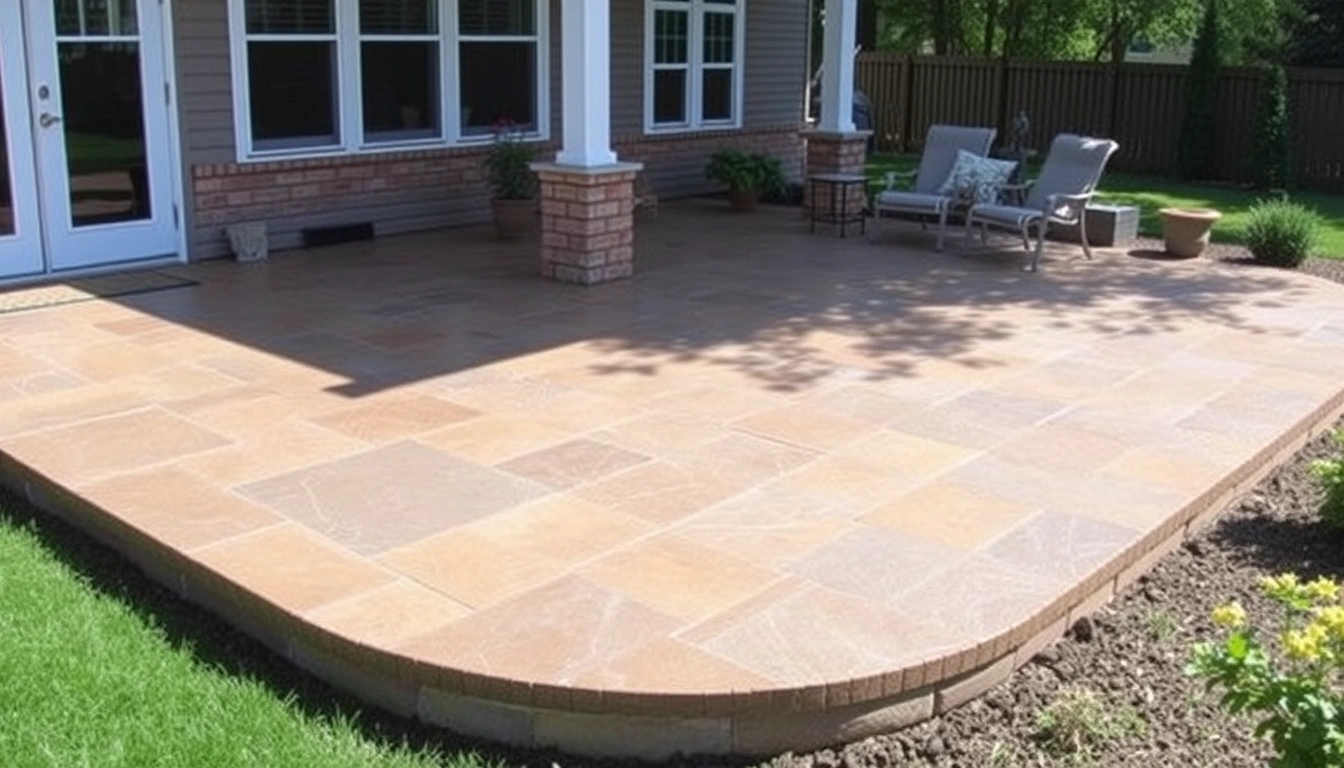
Before I paid for anything decorative, I would check drainage, slab movement, crack pattern, and sealer condition. Those four clues tell you whether you need maintenance, repair, or replacement.
Start with water. After a normal rain, a patio should not trap puddles for long. If water sits for more than a few hours, the slope may be wrong, the surface may have settled, or the patio may need a drainage fix nearby. A patio should generally pitch away from the house at roughly 1/8 inch to 1/4 inch per foot, depending on local practice and how the space connects to the rest of the yard. Without that fall, sealer won’t save you.
Next, look at the cracks. Hairline shrinkage cracks are common in concrete and often cosmetic if they are stable and not widening. Cracks that are wider than a credit card edge, that show vertical displacement, or that open and close seasonally are telling you the slab is moving. That may mean soil movement, poor subgrade, or a control-joint issue. A control joint is a planned weak line that encourages cracking where the slab can tolerate it. If cracks are ignoring the joints and running randomly, the slab detail was probably weak from the start.
Then check the surface. A chalky, faded, or sticky finish often means the sealer is past its useful life. A glossy finish can look fine while losing adhesion beneath the shine, especially if it was over-applied or trapped moisture below it. If the surface flakes, whitens, or turns cloudy after wet weather, moisture may be trapped under a film-forming sealer.
Also look at the edges and traffic paths. Chairs dragged across the same spot, grill grease, fertilizer, plant pots, and metal furniture feet all leave different marks. Wear in isolated zones is normal. Wear everywhere suggests the sealer has simply aged out.
If I were comparing bids, I would ask three practical questions before anything else: what caused the deterioration, what will stop it from recurring, and what is cosmetic versus structural. A contractor who only talks about the color or pattern and never mentions slope, control joints, or drainage is not starting in the right place. According to the American Concrete Institute and the Concrete Network, durability depends on design, placement, and drainage, so ask a professional to explain those details before you sign. One vague answer, and I’d keep walking.
How do you maintain a stamped concrete patio step by step?
You maintain a stamped concrete patio by keeping dirt, moisture, salt, UV damage, and abrasion under control, then resealing before the finish wears down to the slab. The job is simple enough, but the order matters in stamped concrete patio durability and maintenance.
- Sweep or blow off debris weekly during the active season. Use a soft broom or leaf blower once every 7 days, and more often after heavy leaf fall. Check that sand, acorns, grit, and mulch are not sitting in joints or low spots. If debris is left to grind under foot traffic, you will see dull wear bands and tiny surface scratches.
- Wash the patio with a garden hose and a mild, pH-neutral cleaner every 1 to 2 months. Mix according to the label, usually in a bucket or pump sprayer, and rinse thoroughly. Make sure the sealer does not turn cloudy and that runoff clears without leaving a white film. If the finish streaks or turns dull immediately, the cleaner may be too harsh or the sealer may already be failing.
- Remove stains as soon as you notice them. Blot oil, grease, rust, leaf tannins, and fertilizer marks within 24 to 48 hours. Use a cleaner made for the stain type; rust and oil need different treatment, and if you are unsure, consult the sealer or stain manufacturer or a concrete professional. Check whether the stain lightens after the first pass. If you scrub harder and the color around the stain lightens before the stain itself does, you are damaging the finish.
- Keep water moving away from the slab. Check downspouts, splash blocks, and nearby grading at least twice a year, ideally in spring and fall. Make sure no puddles sit at the patio edge after rainfall. If the edge stays wet or moss appears, the drainage pattern is wrong or the patio edge is holding water.
- Protect the surface from abrasion and heat. Put felt or rubber pads under furniture feet, avoid dragging planters, and place grills on a mat if grease or heat is likely to land on the surface. Check that high-contact points are not leaving polished tracks. If you see shiny bare patches where furniture legs sit, you need better protection or a fresher sealer.
- Avoid harsh de-icers and metal-edged tools. Use sand for traction when needed rather than rock salt in large amounts, and shovel snow with a plastic blade. Check that the surface is not scaling after winter. If you notice pop-outs, flaking, or white dusting, chemical exposure may be damaging the concrete or the sealer.
- Inspect the sealer each year and plan resealing every 2 to 5 years, depending on exposure. Full sun, heavy use, and harsh winters shorten the interval; covered patios and mild climates extend it. Check that water still beads on the surface. If water no longer beads and the color looks washed out, resealing is overdue.
- Reapply sealer only after the surface is clean, dry, and compatible with the old coat. Follow the manufacturer’s coverage rate; many decorative sealers are applied in thin coats, not heavy ones. Make sure the patio dries fully before and after application, often 24 to 48 hours depending on weather. If the finish blushes, turns milky, or stays tacky, moisture or over-application is the problem.
A few details matter here. Concrete needs curing before many sealers are applied; fresh decorative concrete is often left to cure before sealing according to product instructions and local practice. If someone wants to seal too soon, trapped moisture can cause haze or poor adhesion. That is why a good contractor will talk about cure time, not just pattern and color, and if there is doubt, you should consult the sealer manufacturer or a concrete professional.
Maintenance is not expensive in materials alone, but labor can matter if the patio is large or has complex borders. A patio of 400 to 600 square feet is often big enough that cleaning, prep, and resealing become a real project, not a quick spray-and-go job. The real cost is not only the sealer; it is the prep work you cannot skip.
What makes a bad job look bad, and what does it usually cost to fix?
A bad stamped concrete job usually shows up as random cracking, color blotching, surface scaling, poor texture transfer, or a sealer that peels, whitens, or turns slippery. Those are not all the same problem, and they do not cost the same to fix.
Blotchy color can come from uneven release, inconsistent finishing, poor curing, or patchy sealer application. That is mainly cosmetic, but on a patio that should look like stone or slate, cosmetic problems are often what the homeowner notices first. A light recoating may help if the surface is structurally fine.
Scaling or spalling is more serious. Scaling is the flaking of the top surface; spalling is a broader breaking away of concrete, often at edges or cracks. In freeze-thaw climates, scaling often points to a weak surface, poor finishing practice, or de-icer damage. Once the surface has scaled, a sealer alone will not rebuild it. Repair may involve resurfacing, patching, or in worse cases replacement.
Peeling sealer is another red flag. It often means the previous coat was applied too thick, moisture was trapped, or incompatible products were layered. The fix can involve stripping and reapplying, which is more labor than people expect. On a decorative patio, the stripping step is often the hardest part because it has to be done without damaging the stamped pattern.
As for price, I will not pretend there is one number. Small cleaning and resealing jobs can be much less expensive than structural repairs, while extensive resurfacing or replacement can move into a much larger budget. What changes the price most is square footage, access, surface condition, how much prep is required, and whether the existing sealer has to be removed. A patio with simple rectangular edges is cheaper to maintain than one with curves, borders, steps, and tight access.
If you are collecting bids, compare them on the same scope. Ask whether the quote includes cleaning, crack repair, sealer removal, joint repair, masking, stain touch-up, and the specific sealer type. A bid that looks cheap because it excludes prep is not cheap once the shortcuts show up.
My blunt view: if a contractor cannot explain why the surface failed, I would not trust that contractor to fix it. A good repair plan starts with the failure mode. A sloppy one starts with “we’ll just coat it,” so consult a stamped concrete professional before you commit.
When should you stop treating it like routine maintenance?
You should stop using routine maintenance and switch to repair or replacement when the slab is moving, the finish is failing in layers, or the concrete itself is breaking down. Those are the situations where another cleaning or reseal will only delay the real fix, so consult a stamped concrete professional before you spend more.
Wide or growing cracks: If a crack opens beyond hairline width and shows height difference from one side to the other, the slab is moving — Have it evaluated for settlement, joint failure, or base issues before cosmetic work.
Repeated ponding in the same area: If water stays in one spot after rain, the surface may be out of grade or sinking — Correct drainage or slab movement first, or the new finish will fail again.
Spalling or scaling over multiple square feet: If the top surface is flaking off across a broad area, the decorative layer is no longer the issue — Look at resurfacing or replacement instead of another sealer coat.
Peeling or milky sealer that returns after cleaning: If the finish clouds, blisters, or peels after moisture exposure, the coating system is wrong or the slab is holding water — Strip or switch systems rather than adding another layer on top.
Soft, dusty, or powdery concrete: If the surface rubs off under a hand or broom, the top paste has been damaged — A sealer will not restore strength, so move to repair options.
Heaving at the edges or near joints: If one side lifts in winter or after wet periods, frost or soil movement is active — Fix the cause, because cosmetic repair will not hold.
Cracks that reflect a recurring structural issue: If a previous patch cracked again in the same line, the movement is ongoing — Rework the base, drainage, or slab section before spending on appearance.
This is the point where a homeowner often wastes money by “refreshing” a patio that really needs structural attention. I would rather see no sealer at all than a polished coating over a slab that is still moving.
What are the most common mistakes with stamped concrete patios?
The most common mistakes are over-sealing, using the wrong cleaner, ignoring drainage, skipping crack repair, and treating all cracks the same. Each one shortens the life of the patio in a different way, so consult a stamped concrete professional if you are not sure which one you are dealing with.
-
Applying sealer too thickly. The consequence is clouding, tackiness, or peeling. The better option is thin, even coats at the product’s stated coverage rate, with full drying time between coats.
-
Using acidic or bleach-heavy cleaners. The consequence is faded color, surface etching, or damaged sealer. The better option is a pH-neutral cleaner and a stain-specific product for oil, rust, or tannins.
-
Sealing over damp concrete. The consequence is trapped moisture, white haze, or blistering. The better option is to wait until the slab is dry enough for the coating system being used, which often means checking weather conditions and allowing 24 to 48 hours of dry time, sometimes longer in humid conditions.
-
Ignoring hairline cracks until they widen. The consequence is dirt intrusion and a stronger visual line as the slab moves seasonally. The better option is to clean and fill stable cracks with a compatible repair material before they spread or telegraph through the finish.
-
Using rock salt heavily in winter. The consequence is scaling, spalling, and sealer damage, especially on exposed edges. The better option is traction sand or a de-icer approved for decorative concrete in limited amounts.
-
Letting irrigation and downspouts soak the patio edge. The consequence is staining, algae, settlement, and joint deterioration. The better option is to redirect water so the slab dries evenly.
If you want one practical habit that prevents a lot of trouble, it is this: inspect the patio at the same time every spring, after the thaw, and every fall, before winter, and consult a professional if you see new movement or failing sealer. That gives you a 2-point check on movement, drainage, and sealer condition. Miss those windows and minor damage turns into a bigger bill.
What changes in cold climates, hot climates, and on problem soils?
Climate changes the maintenance schedule, and soil changes the durability more than the stamp pattern ever will. A stamped concrete patio in Minnesota does not fail for the same reasons as one in Arizona or on clay soil in Texas.