Last updated: October 21, 2026
Stamped concrete patios can perform well in freeze-thaw climates, but only when the slab, joints, drainage, and surface sealer are all doing their jobs. In How Stamped Concrete Patios Perform in Freeze-Thaw Climates, the weak point is not the stamp pattern itself; it is how water moves through, under, and across the patio when temperatures swing above and below 32°F.
If you are deciding whether to call a contractor, the real question is simple: will a stamped concrete patio hold up after repeated winter freezing, plowing, salt, and snowmelt? The honest answer is yes, sometimes for many years, but the margin for error is smaller than in a mild climate.
Key Takeaways
- Freeze-thaw performance depends more on water control than on the decorative stamp.
- A patio with poor drainage, weak joints, or heavy de-icer exposure is at higher risk for surface scaling and joint movement.
- A good installer should talk about slope, air-entrained concrete, joint spacing, and a compatible surface sealer before the first pour.
- In cold regions, the finish needs to survive both freezing water and winter tools like a snow shovel.
- If the patio already has scaling or joint spalling, the fix may be partial repair, not a simple reseal.
What freeze-thaw performance means for a stamped patio
Freeze-thaw performance means the patio can absorb winter weather without losing its surface, shape, or finish after repeated freezing and thawing. In plain terms, water gets into the slab, temperatures drop below freezing, ice expands, then the slab thaws and the cycle starts again.
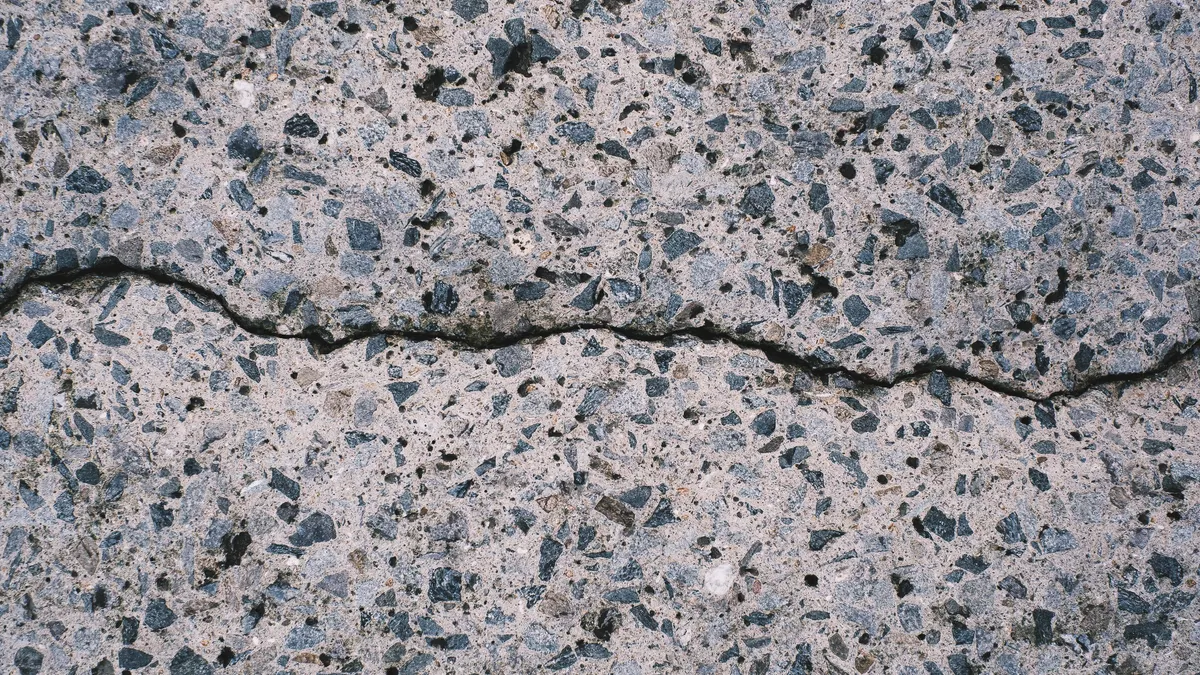
That cycle matters because concrete is porous. Even a dense decorative surface can take on water through tiny pores, saw cuts, edges, and hairline openings around an expansion joint. When that trapped water freezes, it pushes outward. Over time, that stress can show up as surface scaling, joint damage, or movement at the edges.
Stamped concrete has one extra layer of concern: the decorative finish. The pattern itself does not make the slab weaker, but the colored hardener, release agent, and sealer can change how the surface handles moisture and winter wear. A patio that looks fine in October can still show trouble by March if water sits on top or works its way into the slab.
So, the best way to think about freeze-thaw performance is as a system, not a single feature. Concrete mix design, slab thickness, slope, subgrade prep, joint layout, and sealer all affect what happens in winter. A patio with a 1/4-inch surface flaw is not automatically a failure. A patio that traps meltwater near the house or on low spots, though, is already asking for trouble.
For a broader look at safety and long-term use, this article pairs with the hub on stamped concrete patio performance and safety. And because this page focuses on cold-weather behavior, the maintenance picture stays out of scope here.
Why stamped concrete patios fail in winter
Stamped concrete patios usually fail in winter because moisture gets in and de-icing chemistry makes the surface work harder than it should. The visible problem may be a patch of scaling, a flake at an edge, or a joint that opens more each season, but the cause is usually water plus winter stress.
The most common winter stressors are straightforward:
- Standing water before freeze-up. A low spot that holds even a shallow layer of meltwater can turn into an ice patch and keep feeding the freeze-thaw cycle.
- De-icer exposure. Products used to melt snow and ice can speed up surface wear, especially when they are used heavily or left to sit on the patio.
- Snow shovel abrasion. A metal edge scraping across stamped texture can chip highs and catch on weak spots.
- Repeated thawing near edges and steps. Border areas warm and cool faster, so they often show damage first.
- Movement at joints. An expansion joint is supposed to give the slab a place to move. If it is too tight, poorly placed, or full of debris, the slab can stress itself.
A generic article will tell you “concrete cracks in winter.” That is true, but it misses the more important point: the decorative layer often fails before the slab does. Surface scaling is not the same as structural failure. A patio can stay level and still look rough, chalky, and worn if the top layer is being punished every season.
The material choice matters too. Air-entrained concrete is the usual answer in cold climates because it is designed to tolerate freezing water better than non-air-entrained mixes. The American Concrete Institute and the Portland Cement Association both discuss durability and freeze-thaw exposure in cold conditions. That does not make it bulletproof. It just improves the odds when the patio is exposed to snow, ice, and repeated freeze-thaw cycles.
Can stamped concrete patios survive winter?
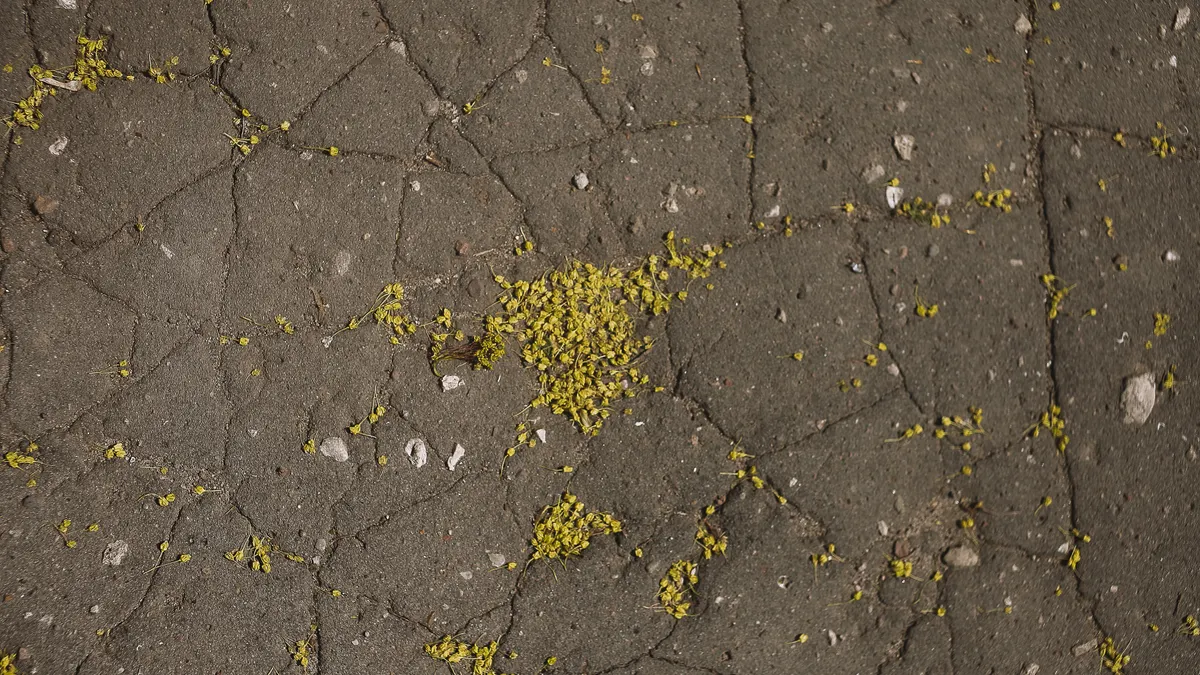
Yes, stamped concrete patios can survive winter if the design and finishing details match the climate. That answer depends on how exposed the patio is, how much meltwater it sees, and how the contractor handles joints, sealer, and drainage.
A patio in a region with frequent winter swings around 32°F faces more stress than one in a consistently cold area where the ground stays frozen. The thaw days are what let water enter the surface, then freeze again later. That is the classic freeze-thaw cycle, and it is harder on decorative concrete than steady cold.
The key details that improve survival are practical, not magical:
- Slope away from the house. Water should not sit where it can soak into the slab or pool along the foundation.
- Use a sealer that fits winter exposure. The wrong surface sealer can trap moisture or wear unevenly.
- Keep joints functional. An expansion joint should be clear and intact so the slab has room to move.
- Avoid aggressive de-icers unless the installer approves them for the finish.
- Protect the surface from metal shovels and scrape edges with care.
A winter-ready patio is not maintenance-free. It is a surface that gives water fewer places to hide. That is the standard to ask a contractor about, not just whether the pattern looks good.
For many homeowners, the best question is not “Will stamped concrete survive?” but “What winter details are built into it?” If the answer is vague, the patio may still look good on installation day and perform poorly by the second or third winter.
This is also where stamped concrete may be the wrong choice for a property with constant snowmelt, poor grading, or repeated plowing across the slab. In those settings, a simpler finish or a different paving material may be easier to live with.
What a contractor should build into a freeze-thaw patio
A freeze-thaw patio should be built so water leaves quickly, joints work correctly, and the surface can shed winter abuse without losing its finish. That means the contractor needs to think like a winter contractor, not only a decorative finisher.
Here is the core procedure a good patio build should follow:
- Check the site slope before any forms go in. The patio should shed water away from the house and away from low corners, so snowmelt does not sit against the slab.
- Prepare the base so it drains, not just supports. A compacted, well-graded base reduces trapped moisture under the patio and helps the slab stay stable during thaw periods.
- Place the concrete with cold-weather performance in mind. In freeze-thaw regions, the mix and finish need to suit winter exposure, not just look good on day one.
- Cut or place joints on a layout that controls movement. A proper expansion joint and related control joints help the slab move where it is supposed to move instead of at random weak points.
- Finish, stamp, and seal with winter use in mind. The surface sealer should support the decorative finish without making the patio overly vulnerable to moisture intrusion or de-icer damage.
A contractor who skips any of those steps may still deliver a patio that looks finished. The problem comes in January, not July.
Two sources worth knowing by name are the American Concrete Institute and the Portland Cement Association. Their guidance on concrete durability and freeze-thaw exposure is not about decoration alone; it is about how concrete behaves in cold, wet conditions. If a contractor can speak clearly about those basics, that is a good sign. If the conversation stays on color and pattern only, that is not enough.
Price also follows those decisions. A simple stamped patio with basic access is one thing. A patio that needs extra base work, drainage correction, more joint planning, or winter-specific detailing costs more because the labor and material choices are more exacting. Even without quoting a number, the range is driven by site prep, slab thickness, pattern complexity, and the amount of finish work required.
What winter damage looks like, and what it usually costs you
Winter damage on stamped concrete usually shows up as scaling, edge wear, joint breakdown, or an uneven surface that holds water and ice. The cost is not just cosmetic; once the top layer starts failing, the patio becomes harder to clean, more slippery, and more expensive to repair later.
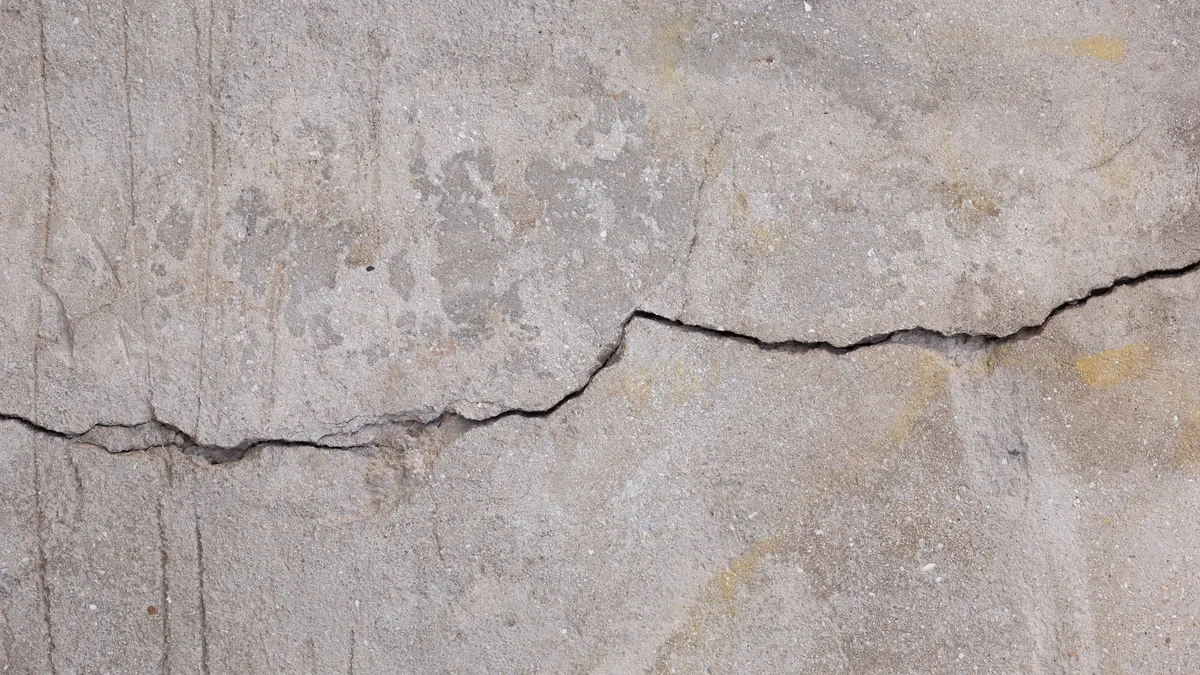
Surface scaling is the most visible early sign. It looks like the top skin is flaking or dusting away. That usually means the surface has taken on too much moisture stress or chemical exposure. Joint problems look different: a seam may widen, crumble, or stop doing its job, which can let the slab move where it should not.
Here is what the visible problems often mean in practical terms:
- Minor scaling: The patio may still be usable, but the decorative finish is losing life.
- Edge spalling: Shovel impact, snowblower contact, or freeze-thaw stress is breaking off corners.
- Joint deterioration: Movement is no longer controlled, so the slab can stress itself in later seasons.
- Color loss and patchiness: The sealer or surface layer has worn unevenly, often where snow and de-icer collect.
The cost trade-off is simple: pay more up front for winter-appropriate detailing, or pay later for patching, resurfacing, or living with a finish that looks tired early. A cheap quote that ignores drainage, joints, or sealer is not a bargain. It is a deferral.
This is the part many homeowners underestimate. A stamped concrete patio does not need to fail structurally for the winter to become a problem. If the surface is rough, patchy, or scaling after a few seasons, the patio has already lost part of its value.
How to protect a stamped patio during winter without overdoing it
A stamped patio is protected in winter by limiting water, reducing abrasion, and choosing de-icer carefully. The goal is not to baby the slab; it is to avoid preventable stress during the months when the surface is already working hard.
A few practical habits matter:
- Use a snow shovel with a plastic blade or a smooth edge, not a sharp metal one.
- Clear snow before it gets packed down and turned into ice.
- Keep drain paths open so meltwater does not refreeze in the same spot.
- Use de-icer only if it is appropriate for decorative concrete and the contractor approves it.
- Avoid metal tools that scrape directly across the stamped texture.
De-icer is the item most likely to be misused. A homeowner may think more is better, but heavy or repeated application can increase surface wear. If the patio already has a weaker sealer or early scaling, chemical exposure can accelerate the decline. That is why winter care starts with what the slab was built to handle.
The other trap is overconfidence after the first winter. A patio that made it through one season does not prove it is built for twenty. Freeze-thaw exposure is cumulative. The same low spot, joint gap, or worn edge gets hit again next year. That is why the right question to ask a contractor is not only “Will it look good?” but “What happens to this surface after repeated winters?”
If the patio is already showing flaking, puddling, or joint movement, a contractor should inspect the condition before you pile on another season of salt and snowmelt. That is especially true in areas with frequent thaw cycles, where small defects tend to grow faster than homeowners expect.
Can stamped concrete survive winter?
Yes, stamped concrete can survive winter when the slab is built and detailed for freeze-thaw exposure. The finish needs drainage, functional joints, and a winter-appropriate sealer so water does not keep cycling through the surface. A patio that stays dry and sheds snowmelt cleanly has a much better chance than one that ponds water or takes heavy de-icer use.
Does freeze-thaw damage stamped concrete patios?
Yes, freeze-thaw damage can affect stamped concrete patios, especially when moisture gets into the surface or under the slab. The usual signs are scaling, edge spalling, and joint wear rather than immediate structural failure. Cold weather alone is not the problem; repeated freezing and thawing with trapped water is what causes the trouble.
How do you protect a stamped concrete patio in cold climates?
Protect a stamped concrete patio in cold climates by managing water, snow, and chemicals. Keep drainage clear, use a snow shovel that will not gouge the finish, and avoid harsh de-icers unless they are approved for the surface. A good contractor should also build in slope, joints, and a suitable sealer before winter ever starts.
Drafted with AI; not yet reviewed by a person.