Last updated: September 10, 2026
Key Takeaways
- In a shaded yard with light foot traffic, you may get closer to 3 years.
- On a west-facing patio in full sun, 12 to 24 months is more realistic.
- Watch for 1 to 5 minutes.
- For most patios, that means every 2 to 3 years in moderate sun and foot traffic, sooner in harsh sun, freeze-thaw climates, or high-use areas.
- Who this applies to, and what I’m assuming you already have
- How do I know if my stamped concrete patio needs resealing?
- When should I reseal a stamped concrete patio?
- What does a reseal job involve, and how long does it take?
- What happens if you reseal too early, or too late?
- When should I stop and call a contractor instead?
- The mistakes people make with stamped concrete resealing
- What should I ask before I hire someone to reseal it?
- FAQ
Reseal the stamped concrete patio when the water stops beading, the color turns chalky or faded, or stains start grabbing hold more easily. That’s the short version. For many patios, the rhythm is every 2 to 3 years in moderate sun and foot traffic; harsher sun, freeze-thaw weather, or heavy use can push the schedule sooner. I’m talking about a patio that already has a stamped finish and either a film-forming sealer or a penetrating one, not bare concrete.
Who this applies to, and what I’m assuming you already have
This is for a patio that’s structurally sound, already stamped, and sealed sometime in the past 1 to 5 years. I’m assuming you know the decorative top layer from the slab below, and that your real question is whether to call a contractor now or squeeze out another season. Not a cracked, heaving patio. Different animal.
Most stamped concrete patios use an acrylic sealer, a solvent-based or water-based film sealer, or a penetrating sealer. Film sealers leave a sheen; penetrating types soak in and usually keep things looking more natural. Timing depends less on the calendar than on wear, UV exposure, and whether the original application was done right. In a shaded yard with light foot traffic, you may get closer to 3 years. On a west-facing patio in full sun, 12 to 24 months is more realistic.
Minor dulling alone usually isn’t an emergency. But if the patio darkens unevenly after rain, or water stops beading in several spots, the sealer is already thinning out. Trust that signal over any “every other year” sales pitch. It’s blunt, but useful.
How do I know if my stamped concrete patio needs resealing?
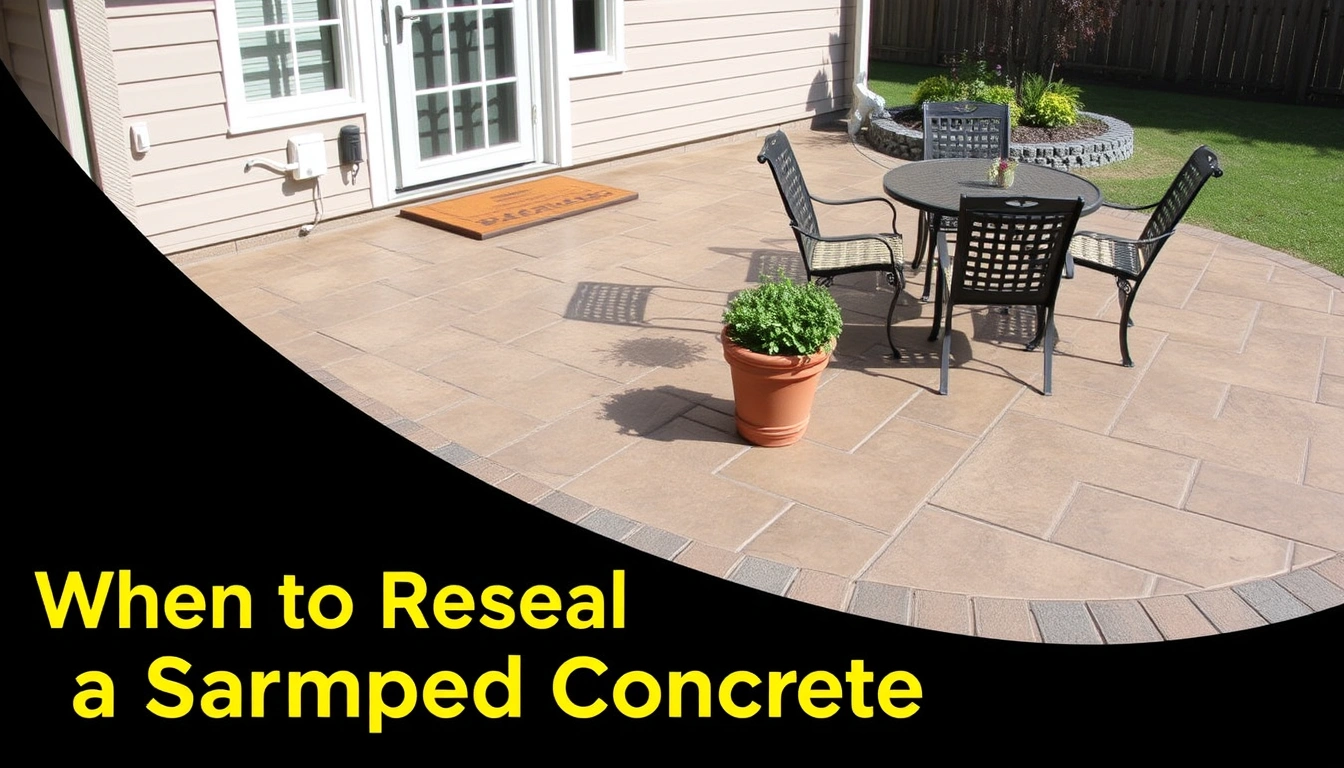
Three checks tell the story: water behavior, surface appearance, and how the patio feels underfoot. A slab can look fine from the kitchen window while the traffic lanes and drainage edges are already wearing down.
Use this order before you call anyone:
- Wash the surface with a hose and mild cleaner, then let it dry for at least 24 hours. You want a clean, dry read on the sealer, not dirt or dampness pretending to be wear. Verify that dust, pollen, and leaf tannins are gone; if the patio still looks blotchy after drying, the problem may be staining, not sealer failure.
- Pour a 2 to 3 inch puddle of clean water in three places: a sunny area, a shaded area, and a high-traffic area. Watch for 1 to 5 minutes. A healthy sealer should make water bead or at least sit visibly on top for a bit. If the water darkens the concrete within seconds, the surface is absorbing moisture and likely needs resealing.
- Inspect color loss in direct sunlight and in evening light. Look at the stamped grooves, raised texture, and border bands. If the color looks washed out or chalky in one zone but not another, the sealer has worn unevenly. That often happens where chairs scrape, where sprinklers hit, or where the sun is strongest.
- Run your hand across the surface after it is dry. A film sealer should feel smooth, not powdery. If your hand picks up a white or cloudy residue, the finish may be oxidizing or flaking. That is a warning sign, because resealing over a failing film can trap the defect.
- Check the edges, joints, and low spots. These are the places where water sits longest and where sealers fail first. If you see dark rings, mineral deposits, or small white patches, the coating is uneven. That usually means spot repair or stripping may be needed, not just a quick topcoat.
- Look for stains that used to wipe off but now soak in. A fresh sealer resists oil drips, leaf stains, and rust splashes better than a worn one. If a drop of cooking oil leaves a mark after 10 to 15 minutes, you are past the point where the old sealer is doing much work.
- Check whether the surface feels slick when wet. Slipperiness does not automatically mean “time to reseal,” but it can mean the wrong sealer was used or too much product was applied. If the patio is already slippery in sandals, do not chase more gloss without asking for a slip-resistant additive such as fine polymer grit.
- Make a note of the last reseal date, if you know it. If it has been 2 years or more in strong sun, or 3 to 5 years in gentler conditions, inspection matters even if the patio still looks decent. Sealer failure often starts before obvious cosmetic failure.
Here’s the useful read: if water soaks in instead of beading, reseal soon. If the patio still beads water well and the finish looks even, you can usually wait. Penetrating sealers are especially sneaky that way; they wear down without the dramatic look of a glossy film coat.
For the chemistry and cure guidance, see the manufacturer instructions for Foundation Armor and Prosoco before treating any surface condition as universal.
When should I reseal a stamped concrete patio?
Reseal when the patio is dry, clean, and showing wear — not after algae, oil, or a summer of sprinklers has already done the damage. Spring or early fall is usually the sweet spot for many homeowners, with daytime temperatures roughly between 50°F and 85°F and no rain forecast for at least 24 hours. Why that window? Many sealers need moderate temperatures and dry conditions to cure properly; check the product label or consult a professional, and see manufacturer guidance such as Sika or LATICRETE for the exact requirements.
A stamped patio in full sun often needs attention every 18 to 24 months if it has a glossy acrylic sealer. In shade, or with a penetrating sealer, 2 to 3 years is more typical. Solvent-based acrylic may hold sheen longer than a thin water-based coat, but it can also yellow or build up if layers go on without proper cleaning.
I would not wait for total failure. Once the topcoat is gone, the surface starts taking stains and UV damage faster, and the next reseal usually costs more because prep gets harder. In plain terms: reseal when the sealer looks tired, not when it has vanished.
The most useful trigger is usually a combination of age and performance:
- age near the 2- to 3-year mark,
- water no longer beading uniformly,
- fading in sun-exposed zones,
- and visible wear at edges or joints.
Don’t be fooled by shine from a few steps away. Gloss can hide weak protection. A patio can look polished and still drink water like a sponge in the textured low spots.
For broader maintenance timing, the NRMCA and concrete-care guidance from the Portland Cement Association both emphasize surface condition and exposure more than a single calendar rule.
What does a reseal job involve, and how long does it take?
A proper reseal usually takes 1 to 3 days, and the patio should be dry before and after the work. How long it takes depends on square footage, weather, whether the old sealer needs stripping, and whether the contractor applies one coat or two thin ones. A clean patio can be a half-day of labor plus cure time; a surface with failing buildup can drag on much longer, so consult a professional if you are unsure and compare the plan against manufacturer instructions from sources such as Rust-Oleum or Ghostshield.
The usual sequence looks like this:
- Clean the slab thoroughly.
- Repair cracks or chips if needed.
- Remove failing sealer if it is flaking, whitening, or too thick.
- Let the concrete dry fully.
- Apply the sealer in thin, even passes.
- Allow the first coat to flash off.
- Apply a second coat only if the product and surface call for it.
- Keep foot traffic off until the sealer has cured enough for use, but check the product label or consult a professional for the actual re-entry time.
A couple details matter. Moisture inside the slab is a common trap; if the concrete is damp below the surface, a film sealer can haze or turn milky. That’s why many contractors run a moisture test before sealing. After pressure washing, the patio may need 24 to 72 hours to dry fully — longer in humid weather or after heavy rain.
Cost varies a lot by region and condition, so I’d treat any flat quote with caution unless it includes prep, crack repair, and old sealer removal if needed; consult a professional and compare against the scope, not just the price, using guidance from Concrete Network and local contractors. Basic reseal work is usually priced by the square foot, but labor for prep is the real driver. A patio that only needs cleaning and one coat is nothing like one with peeling sealer and blotchy spots.
| Condition | Typical action | Estimated timing | Price driver |
|---|---|---|---|
| Good water beading, minor dulling | Inspect and reseal lightly | About 1 day plus cure time | Cleaning and one coat |
| Uneven sheen, fading, light staining | Prep and reseal | 1 to 3 days | Labor and surface drying |
| Flaking, haze, or heavy buildup | Strip, repair, then reseal | 2 to 4 days | Removal of old sealer |
What happens if you reseal too early, or too late?
Reseal too early, and you can trap defects under a thick, cloudy film that looks worse than the worn finish you started with. Stamped concrete is textured, so heavy resealing can fill the pattern and mute the detail. On glossy acrylic systems, too many coats can also make the patio slick and raise the odds of whitening or peeling.
Wait too long, and the concrete underneath starts taking the hits. Color fades faster. Stains sink deeper. In cold climates, freeze-thaw damage becomes more likely because unprotected water can sit in pores and textured grooves. In hot, sunny places, the UV damage shows up mostly as chalking and lost color enhancer. Either way, dragging your feet makes the next job tougher and usually pricier.
The better rule is to reseal on wear, not habit. Honestly, I’d rather see a homeowner check once a year and reseal when water stops beading than slap on a fresh coat every season.
When should I stop and call a contractor instead?
Stop and call a contractor when the patio needs more than a simple clean-and-reseal. That’s the smart move, not a defeat.
Flaking or peeling sealer: The old coating is breaking loose — resealing over it usually makes the failure bigger. Ask about stripping and reapplication.
White haze or milkiness after rain: This often points to moisture trapped under a film sealer or to blushing in humid conditions — a new coat alone may not fix it. Get a moisture-aware diagnosis.
Dark patches that stay dark after drying: This can mean oil contamination, water intrusion, or a substrate problem — the surface may need more than cosmetic resealing.
Active cracks wider than a hairline: Reseal is not crack repair. If the slab is moving, the new sealer will not stop the crack from telegraphing through.
Efflorescence or white salt deposits: That means moisture is moving through the concrete and carrying salts to the surface — sealing without addressing the source often makes cleanup harder.
Repeated slipperiness: If the patio has become slick more than once, the product choice or application method is wrong for the space — ask for a lower-gloss or slip-resistant system.
If the patio has been sealed multiple times and the surface is getting too glossy or losing detail, a contractor should assess whether stripping is necessary. That is not a 15-minute patch. It is a prep job.
The mistakes people make with stamped concrete resealing
The biggest mistake is sealing a dirty or damp surface. That traps grime and moisture, and the finish can cloud within days. The fix is dull but nonnegotiable: wash, dry, then seal.
A second mistake is using too much product. Heavy coats cause puddling, trapped solvent, and a hazy or sticky finish. Thin coats work better on textured stamped patterns because the color sits on highs and lows differently. If a contractor says one thick coat will “build protection,” I’d be cautious.
A third mistake is sealing over old, failing film. Peeling patches do not disappear under a new layer. They usually show through or get worse at the edges. The correct alternative is spot stripping or full stripping, depending on how far the failure has spread. In other words, don’t hide the mess; remove it before it telegraphs.
A fourth mistake is chasing gloss on a patio that already gets wet from sprinklers, shade, or pool splash. More shine can mean more slipperiness. A satin finish or an additive may fit better. That trade-off matters on entry paths and around patios used by kids or older adults.
A fifth mistake is treating all stamped concrete the same. A driveway edge, a covered lanai, and a full-sun backyard patio age differently. A patio under an overhang may need resealing later than one exposed to UV and rain.
What should I ask before I hire someone to reseal it?
Ask how they will prep the slab, what sealer they plan to use, and what they’ll do if the existing coating is failing. That tells you far more than a price alone.
Good questions include:
- Will you test whether the old sealer is acrylic, penetrating, or unknown?
- Will you strip failing sealer, and how is that priced?
- How long will the patio need to stay off limits?
- Will you use a slip-resistant additive if the finish is glossy?
- What temperature and weather window do you need?
- How many coats do you typically apply on stamped texture?
Get a written scope that names the prep steps and the cure time. If a contractor cannot explain why they recommend resealing now instead of next year, that’s a problem. A good answer should mention water beading, UV exposure, surface wear, and the current sealer condition.
If you are comparing bids, make sure you are not comparing a simple topcoat to a full strip-and-reseal. Those are different jobs and can differ a lot in labor. A lower bid that skips prep is not a bargain.
FAQ
How often should a stamped concrete patio be resealed?
Most patios need resealing every 2 to 3 years, but full-sun areas or glossy film sealers may need it closer to every 18 to 24 months.