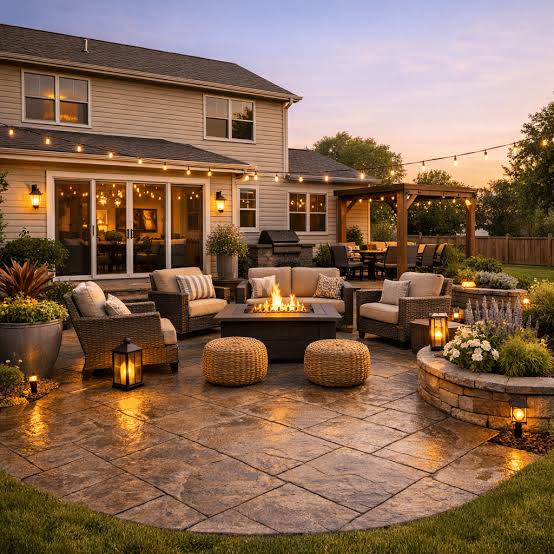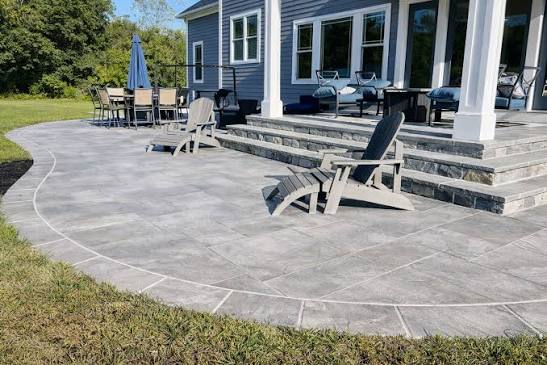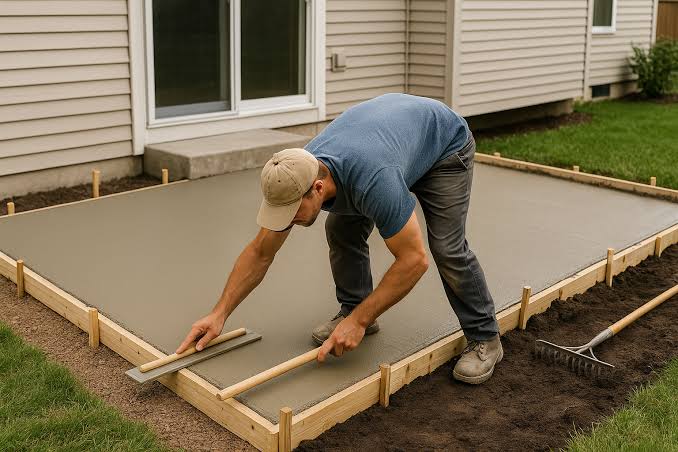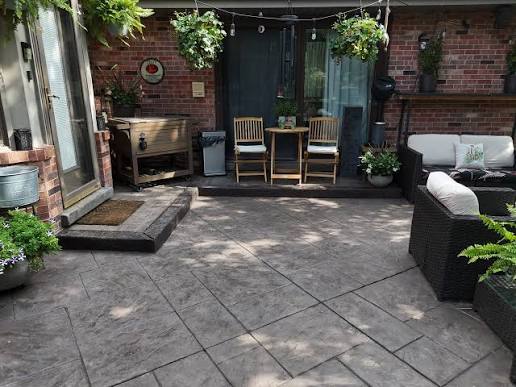
Last updated: September 10, 2026
Key Takeaways
- In northern climates with freezing nights, a September pour can be smart if the forecast stays above about 40°F during curing.
- Late spring through early fall is often the easiest window for a stamped concrete patio, with many jobs landing in a 50°F to 80°F daytime range.
- You want a stretch where a heavy rain is unlikely during excavation, placing, and the first 24 to 48 hours of curing.
- Verify that the base can be compacted in lifts, usually with about 4 inches of aggregate at a time.
The best time of year to install a stamped concrete patio comes down to your climate, your site, and the contractor’s cure plan. For most homeowners, the stamped concrete patio timing window runs roughly from April or May through September. But the sweet spot shifts with temperature, rainfall, access, and how the slab will be protected while it cures. This guide lays out the best time of year to install a stamped concrete patio, how to judge your own yard, and when waiting is the smarter move.
Who this advice applies to — and what you should already know
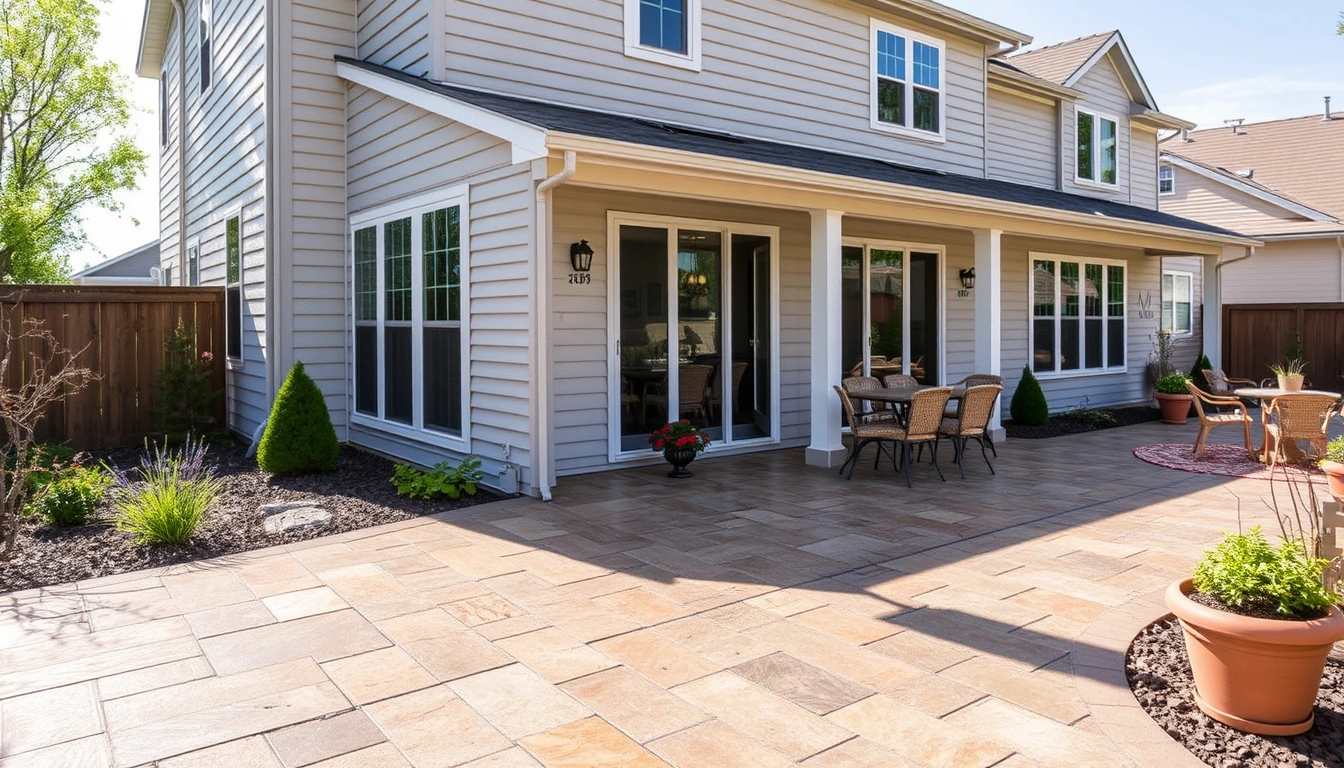
This is for a homeowner hiring a concrete contractor for a stamped concrete patio, not a DIY weekend pour. You should already know the rough size you want, have a way for equipment to reach the site, and understand that stamped concrete is not the same as plain broom-finish concrete. Colored release agent, texture mats, and often control joints are part of the process; they’re what make the slab look like stone, slate, wood plank, or brick.
Trying to pick a month? Start with curing weather. Concrete gains strength as it hydrates, and temperature, wind, humidity, and rain all affect that process. A stamped concrete patio can still be placed outside the ideal season, but the crew has to work harder to manage finishing, curing, and protection. Cost, timing, or both. Usually.
I wouldn’t treat this like a one-size-fits-all rule; talk with a local concrete professional and check Portland Cement Association and NOAA guidance for temperature and precipitation trends in your area. In northern climates with freezing nights, a September pour can be smart if the forecast stays above about 40°F during curing. Hot inland areas can be a different story — July may be a bad bet because concrete can set too fast unless the crew starts early and keeps evaporation under control. In rainy regions, the drier stretch often matters more than the month name.
If the site has drainage trouble, deep shade, poor access, or a steep grade, the best season may simply be the one that lets the contractor fix those issues before the pour. A stamped concrete patio that settles, flakes, or shows color blotching costs more to repair than waiting a few weeks for better conditions. That math stops working fast.
What time of year is usually best for stamped concrete patio work?
Late spring through early fall is often the easiest period for stamped concrete patio work, with many jobs landing in a 50°F to 80°F daytime range. Not a hard rule. Just the range where concrete is usually easier to manage: less risk of flash-setting in heat, and less need for cold protection in the first 24 to 72 hours. The American Concrete Institute and the Portland Cement Association both say curing conditions matter just as much as the pour itself.
If I had to narrow it further, I’d pick two windows:
- Spring shoulder season: after the ground thaws and nighttime lows are no longer near freezing.
- Early fall: before cold nights, leaf drop, and short daylight start to complicate finishing.
Summer can still work, but it’s the season where bad planning shows up fastest. Hot surface temperatures, wind, and low humidity can pull water from the slab too quickly. That can lead to plastic shrinkage cracking while the concrete is still fresh, or make the color and texture less even if the crew is rushing. In very hot places, the contractor may need a retarder, a pre-sunrise start, or dampening the base without leaving standing water. Nerve-wracking? A little.
Winter is the toughest season unless you live somewhere mild. Concrete should not be exposed to freezing during early curing, and a frozen subgrade is a poor base for a patio. A crew may still place concrete in cold weather with blankets, heated enclosures, or admixtures, but that adds cost and complexity. For a decorative patio, I usually think of winter as the season to plan, not pour.
The practical answer for a homeowner is simple: choose the season that gives the contractor stable temperatures, dry access, and enough cure time before the weather turns, then confirm that plan with a local professional before you book. That matters more than the exact calendar month.
How do I pick the right month for my yard?
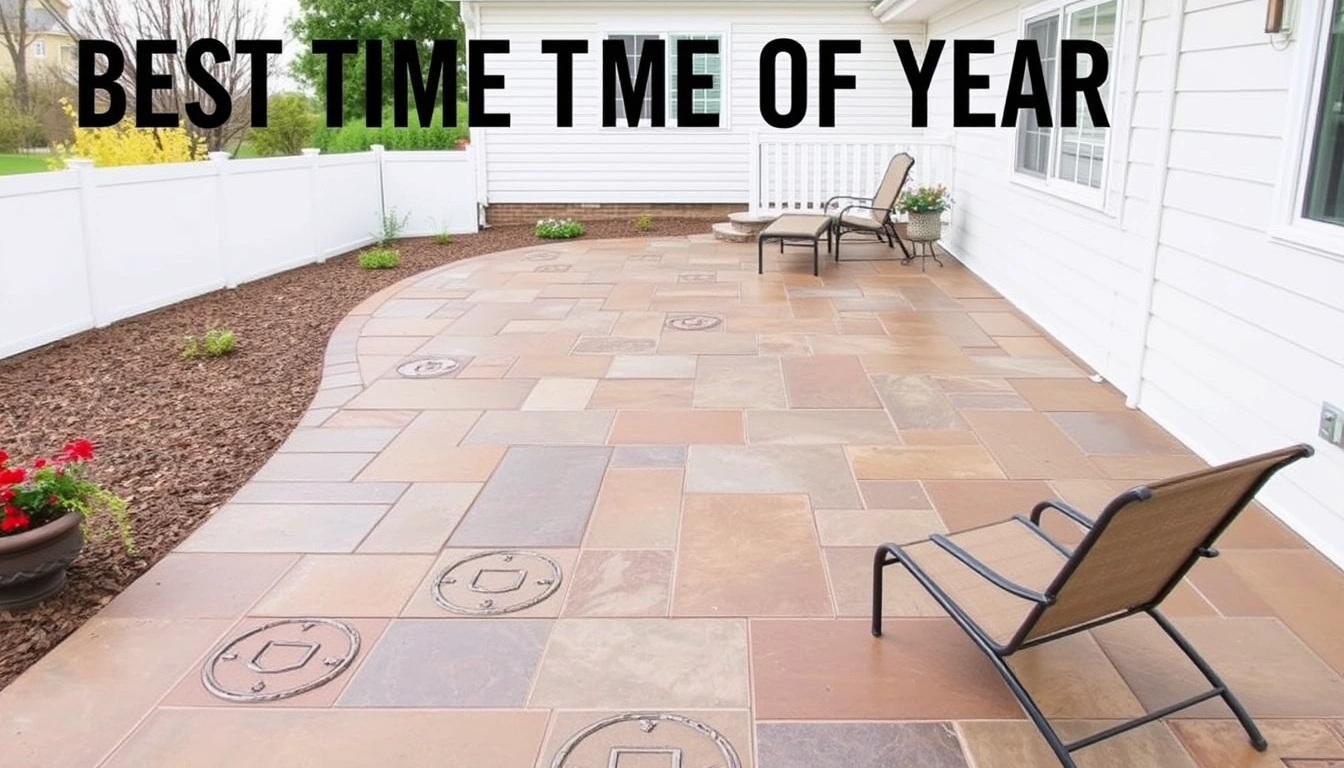
Start with the weather pattern that affects curing, then match it to your contractor’s workload. A stamped concrete patio is usually installed in a 1- to 3-day field process, but excavation, base prep, and permit approvals can stretch the project longer. The right month is the one that gives the crew the best shot at a clean pour and the first 7 days of cure.
-
Check nighttime lows for a 2-week window. Ask for temperatures above about 40°F if you are in a cold climate, and below the kind of heat that routinely pushes daytime highs well above 90°F if you are in a hot one. Verify that the forecast looks stable, not just one good day. A problem sign is a big swing between warm afternoons and near-freezing nights.
-
Look at rain, not just temperature. You want a stretch where a heavy rain is unlikely during excavation, placing, and the first 24 to 48 hours of curing. Verify whether your area gets afternoon thunderstorms, early-season snow, or long wet periods. A problem sign is a site that stays muddy after every shower.
-
Confirm the subgrade can be worked. Subgrade means the prepared soil or aggregate base under the slab. It should be firm, level enough to compact, and free of standing water. Verify that the base can be compacted in lifts, usually with about 4 inches of aggregate at a time. A problem sign is pumping, rutting, or clay that smears under equipment.
-
Ask how the crew handles hot-weather or cold-weather pours. In hot weather, they may use sunshades, evaporation retarder, or early starts; in cold weather, insulated blankets or heated enclosures. Verify the plan before you sign. A problem sign is a contractor who says, “We’ll just make it work.”
-
Schedule enough cure time before stress. Keep heavy furniture, grills, and foot traffic off the slab for the period your contractor specifies; many crews use 24 to 48 hours for light foot traffic and longer before placing heavy loads. Verify that you will not be hosting an event on day two. A problem sign is a hard deadline that cannot move.
-
Match the pour to your finish type. Deep slate, wood grain, and tight-edged patterns are less forgiving if concrete sets too fast. Verify the crew has enough labor for stamping, coloring, and edging. A problem sign is a big patio with too few hands on site.
-
Check whether permits or inspections could delay the start. Some municipalities need setback checks, drainage review, or utility marking before work begins. Verify that approvals will be in hand before the scheduled pour. A problem sign is a contractor booking your installation before paperwork is ready.
-
Get a written schedule with weather contingency. The best contractors build in a rain date or a shift of a few days. Verify what happens if weather turns. A problem sign is no contingency at all.
What does a good stamped concrete patio season look like on paper?
A good season gives the contractor room to do the unglamorous work well: excavation, base compaction, forming, reinforcement, pouring, stamping, and curing without racing the weather. I’d want a project window that leaves at least 7 calm days after placement, even though the slab will be walkable much sooner than full strength.
This is where a lot of generic advice misses the mark: it fixes on the pour date and skips the days around it. The slab is vulnerable before and after the stamp pattern is pressed. Dry, windy air can pull moisture out too quickly. Rain on fresh sealer can leave whitening or blotching. And if a cold snap hits, the surface may cure unevenly and the color can look patchy. Ugly, honestly.
A good contractor will also explain whether your decorative finish changes the timing. Integral color, where pigment is mixed into the concrete, behaves differently from a colored release plus gray base. Borders, saw cuts, and accent bands can add time. A complex 600-square-foot patio with curves, steps, and a banded border may need a wider weather cushion than a simple rectangle.
Price can shift with season too. I can’t give you a universal number without pretending local labor and material pricing stay fixed, which they don’t. Still, off-season or shoulder-season work can sometimes be easier to schedule, while emergency weather protection, heat mitigation, or cold-weather enclosures can push cost up. If a contractor’s quote changes a lot by month, ask exactly what weather controls are included.
A good result has clean stamp lines, consistent color, no raveling at the edges, and joints placed where cracks are least likely to show. See hurried stamping, surface tears, color swing, or edge collapse? The season may have been part of it, but workmanship is usually part of it too.
When should I wait instead of pouring now?
You should wait when the weather or site conditions make the slab more likely to fail than finish well.
Nighttime temperatures are forecast near freezing for several days: early curing is at risk, and the finish can suffer — delay the pour or use cold-weather protection only if the contractor specifically includes it.
The site is saturated or muddy after rain: the base cannot compact properly, which can lead to settlement — wait until the subgrade firms up and can be graded without rutting.
Daily highs are consistently above about 90°F with wind exposure: the concrete may set too quickly for stamping and finishing — reschedule to cooler hours, a different week, or a different season.
Heavy rain is likely within 24 to 48 hours of the pour: the finish, release agent, or fresh sealer can be damaged — move the job unless the contractor has a real protection plan.
Your project depends on a hard deadline, like a party or home sale photo shoot: decorative concrete needs cure time, not just pour time — delay until you can protect the surface for at least the first week.
The crew cannot explain how they will handle heat, cold, or rain: that usually means they are relying on luck — choose a contractor who can state the plan in writing.
The mistakes that make the wrong month expensive
The biggest mistake is picking the first open date instead of the right weather window. That can lead to rushed finishing, color inconsistency, or shallow stamp detail. The correct alternative is to treat the patio like a weather-sensitive craft, not a commodity.
A second mistake is ignoring ground conditions. A patio placed on soft, wet, or frozen subgrade may crack or settle. The fix is not a prettier stamp pattern; it is better base prep and the willingness to delay.
A third mistake is assuming summer is always easiest. In hot weather, the concrete can become unworkable fast, especially on large patios or in direct sun. That can leave visible tool marks, missed texture, or joints that were cut late. The correct alternative is an early start, shade, and a crew that can finish on time.
A fourth mistake is underestimating the curing period. Homeowners often think “installed” means “ready.” It doesn’t. A patio may be light-foot-traffic ready in a day or two, but it still needs protection from furniture, hoses, grills, and sharp impacts. The correct alternative is to ask for a specific use timeline before you sign.
A fifth mistake is hiring by price alone. A low bid that skips base depth, reinforcement, sealing, or weather protection can be more expensive later. The better alternative is to compare scope, not just total dollars.
How long does installation take, and what changes by season?
A typical stamped concrete patio takes about 1 to 3 days of active field work, plus curing time afterward. Smaller, simpler patios can move faster; larger or more detailed jobs can take longer. The season changes both pace and risk.
In spring and fall, crews usually get more forgiving working conditions. In summer, the team may need to pour before noon and stamp fast. In cold weather, the same job can stretch because the crew has to protect the slab and sometimes wait for each phase until the temperature is right. If your contractor says a large decorative patio can be installed in one day during a tough season, I’d ask how many people will be on site and what happens if the concrete starts to set early.
If you want the slab sealed, ask whether sealing happens soon after cure or after a longer wait. Sealer timing affects appearance and protection, and rain or humidity can delay it. A bad outcome often shows up as cloudy sealer, trapped moisture, or color that looks darker in some spots than others.
The right season is the one that lets the contractor preserve detail. A stamped patio is not only about getting concrete onto the ground. It’s about getting texture, joints, color, and cure to work together.
What should I ask a stamped concrete contractor before I book the job?
Ask five direct questions before you book: what weather range they require, how they handle rain or temperature swings, what base depth they specify, how long the patio will be out of service, and what is included in the quote. I’d also ask whether the estimate includes sealing, control joints, and cleanup.
Ask for the concrete mix and finish plan in plain language. You do not need a chemistry lecture, but you do need to know if the job uses integral color, a release agent, fiber reinforcement, or rebar where appropriate. If the answer is vague, that’s a warning sign.
Ask about price in terms of what drives it. For a decorative patio, size, shape, access, pattern complexity, staining or coloring, and weather protection all affect cost. A 300-square-foot rectangle with simple stamping is not the same job as a 700-square-foot multi-level patio with curves and a border. If a contractor won’t explain the differences, compare another bid.
Ask what a bad job looks like. A straight answer should include uneven color, misaligned stamp pattern, chipped edges, low spots that hold water, and control joints that are too shallow or too late. If the contractor says every job is perfect, I’d keep looking.
FAQ
Is spring or fall better for a stamped concrete patio?
Fall is often a little easier in warm climates because the heat is lower, while spring can be better in places with a long dry season. The better choice is the season that fits your local curing conditions and your contractor’s schedule.
How warm does it need to be to pour stamped concrete patio slabs?
A practical target is often daytime temperatures in the 50°F to 80°F range, with nighttime lows staying above freezing. Your contractor may adjust that based on mix design, sun, wind, and protection plans.
Can you install a stamped concrete patio in summer?
Yes, but stamped concrete patio work in summer usually needs more control over evaporation, finishing speed, and curing protection. Early starts, shade, and a prepared crew matter more in hot weather.
Can you install a stamped concrete patio in winter?
Yes, in some climates and with the right protection. Cold-weather pours often require blankets, heated enclosures, or admixtures, which can increase cost and complexity.
How long before I can use a stamped concrete patio?
Light foot traffic is often allowed after 24 to 48 hours, but heavy furniture, grills, and sealing may need a longer wait. Ask your contractor for the exact timeline.